How does the brain know what it needs, and how does it translate that into behavior?
Every decision an animal makes is shaped not only by the external environment but also by its internal physiological state. Hunger, thirst, fatigue, and other internal needs continuously bias neural activity and behavioral choices. Yet we still know remarkably little about how these physiological variables are represented within the brain and transformed into distinct behavioral states.
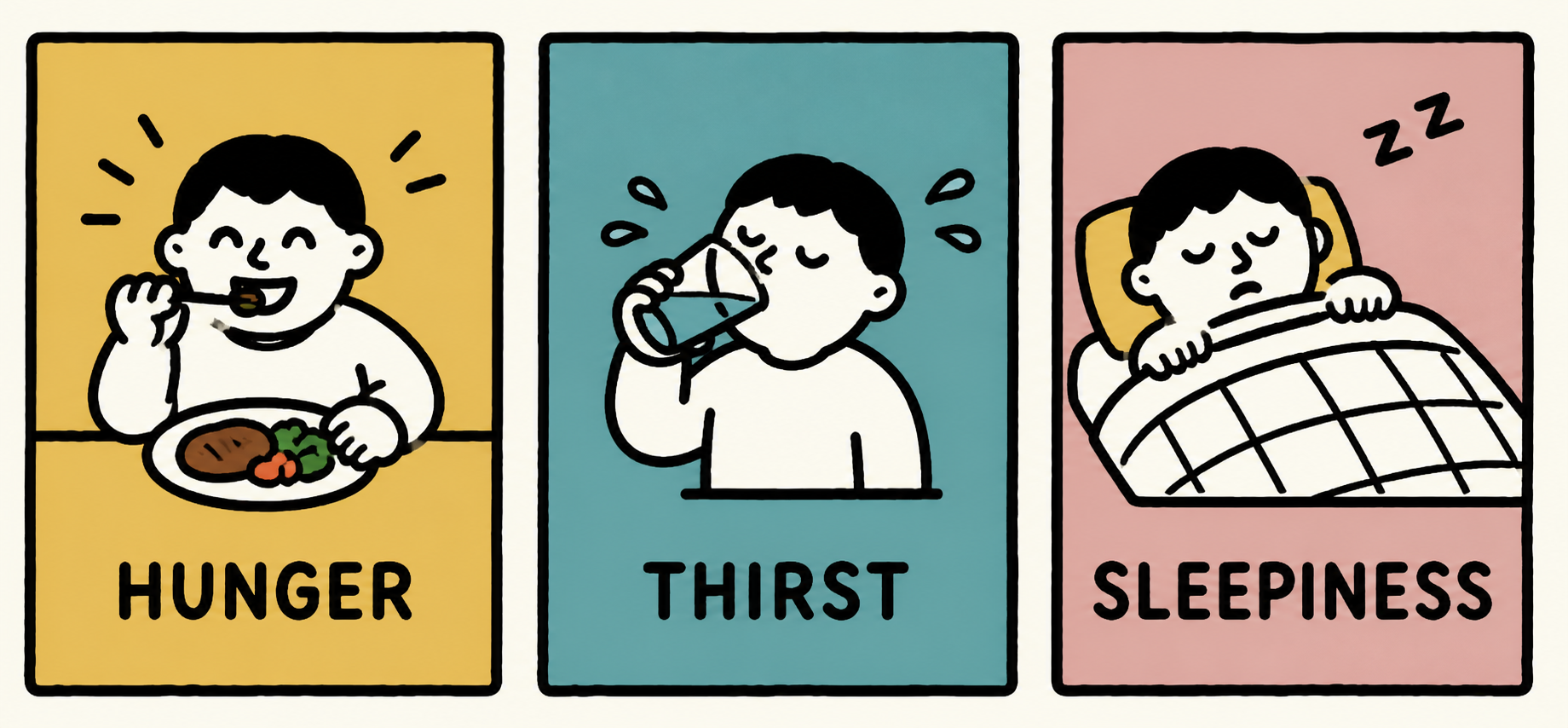
Our laboratory uses sleep homeostasis as a model system to understand how the brain senses, encodes, and regulates internal physiological needs. Sleep need gradually accumulates during wakefulness and dissipates during sleep, providing a unique opportunity to understand how persistent internal states emerge through circuit plasticity and ultimately shape behavior.
By combining systems neuroscience, molecular genetics, electrophysiology, and behavioral approaches, we investigate how internal states are generated and represented within neural circuits, and how these neural representations ultimately guide adaptive behavioral decisions.
Research Focus
Sleep Homeostasis:
Sleep homeostasis is a fundamental biological process that maintains healthy brain function, yet the neural mechanisms underlying sleep need remain largely unknown. We investigate how sleep need is generated during wakefulness, represented within neural circuits, and transformed into the physiological processes that initiate and maintain sleep.
Persistent Internal States:
Internal states are not instantaneous signals; they emerge gradually, persist over time, and continuously shape behavior. We investigate how molecular signaling and circuit plasticity generate and maintain these persistent brain states, revealing how the brain integrates physiological history into adaptive behavioral responses.
Behavioral Selection:
Internal states do not dictate behavior; rather, they bias behavioral choices according to an animal's physiological needs. We investigate how neural circuits integrate internal state signals with environmental information to select context-appropriate behaviors, providing a circuit-level framework for understanding adaptive behavioral flexibility.
Sleep preparatory behaviors of lab mice: Sleepy animals tend to perform a specific behavioral repertoire to ensure hygiene and better sleep. Optogenetic stimulation of sleep‑drive neurons in the thalamus promotes pre‑sleep grooming (left) and nest‑organizing (right) behaviors of mice even during their normally awaking night‑time.
Current Questions
How is sleep need sensed by the brain?
How is sleep drive represented within neural circuits?
How does circuit plasticity encode persistent internal states?
How do internal states influence behavioral decisions?
Long-term Vision
Understanding the Diversity of Sleep Circuits:
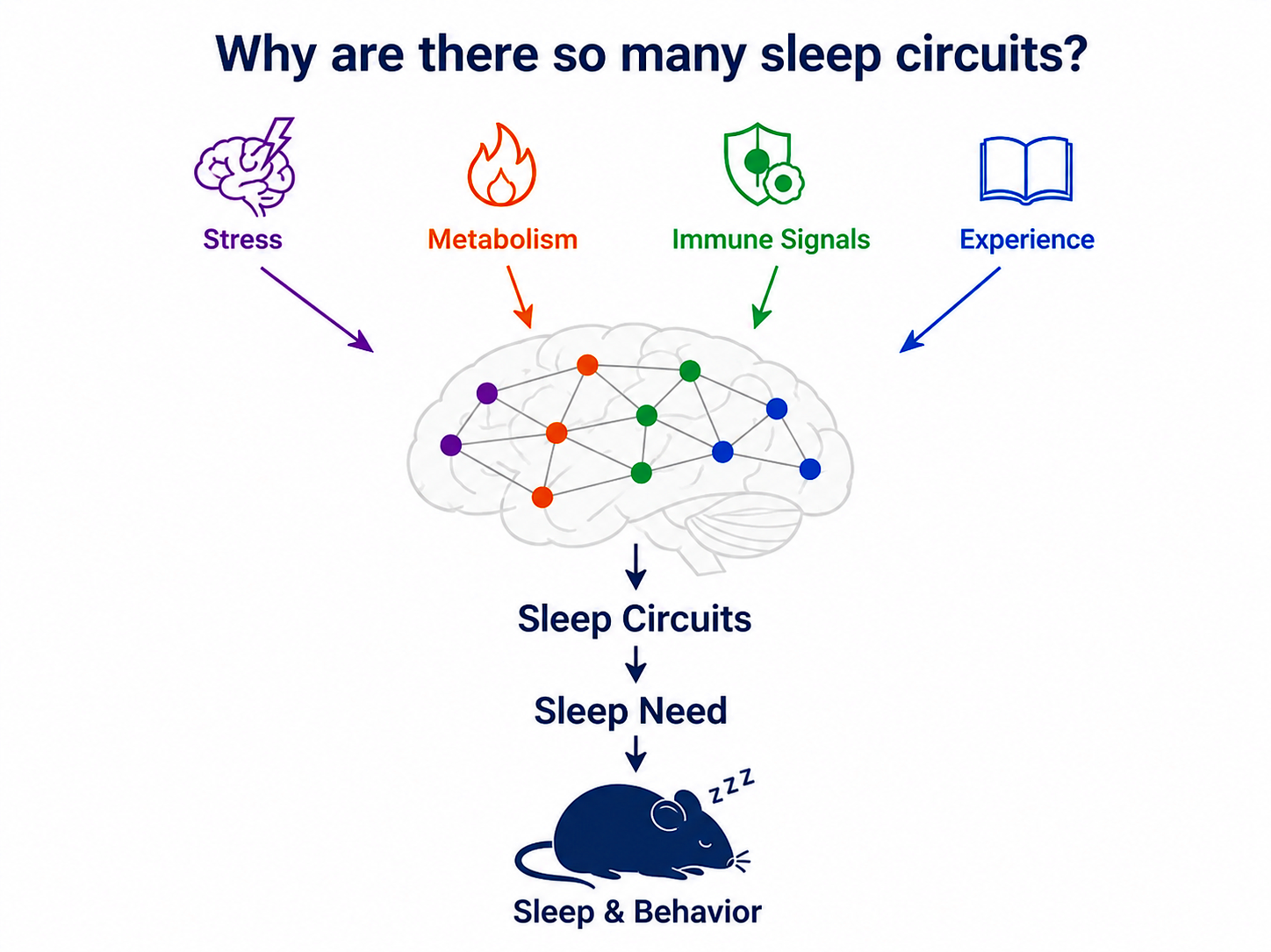
Decades of research have revealed that sleep is regulated by diverse neural circuits distributed throughout the brain. However, the reason for the existence of such a multitude of sleep-related circuits remains unknown. Our long-term goal is to elucidate why diverse sleep circuits exist, identify the physiological signals they monitor, and understand how they comprehensively integrate physiological and environmental information to regulate sleep and related behaviors.
Sleep Circuits & Brain Health:
Chronic sleep disturbance is increasingly recognized as a major contributor to neurological and psychiatric disorders. By uncovering the neural mechanisms of sleep regulation, we aim to establish a circuit-based framework for understanding brain disorders associated with disrupted internal states, including neurodevelopmental disorders, neurodegeneration, and aging.